Culture & Heritage
Culture & Heritage of Ilaje
The Ilaje (Ìlàjẹ) are a distinct coastal subgroup of the Yoruba people, renowned as the “Waterside Yorubas.” Their culture is profoundly shaped by the Atlantic Ocean, rivers, creeks, and lagoons that define their homeland along the shoreline of Ondo State and adjacent areas.
Maritime life forms the core of Ilaje identity. Fishing—both freshwater and deep-sea—is not merely an occupation but a cultural cornerstone, encapsulated in the popular saying: “Ubo ẹri ipa tọ, ilaje gwa to rin” (“Wherever the path of river currents flows, there you will find the Ilaje”).
Traditional skills include canoe and launch building, net- and trap-making from raffia, salt production, mat-weaving, and timber floating. Settlements often follow linear patterns along the coast or denser clusters in brackish and freshwater zones.
The Ilaje speak a dialect of Yoruba with distinctive coastal vocabulary and intonation, while remaining mutually intelligible with standard Yoruba. Oral traditions, praise poetry (oríkì), proverbs, and naming practices reflect Yoruba concepts of destiny, morality, family, and the spiritual world, often infused with aquatic imagery.
Religious heritage blends indigenous beliefs with Christianity.
Key traditional deities include Malokun (Olokun), the sea divinity associated with fertility and the ocean’s bounty, and Ayelala, a powerful female orisha of justice, truth, oaths, and retribution.
Ayelala is widely invoked across Ilaje, Ikale, and neighboring groups to expose wrongdoing (especially theft, adultery, and witchcraft) and enforce social order through feared supernatural sanctions.
Christian denominations, particularly Cherubim and Seraphim (Zion) churches, Anglican, and others, predominate today, yet traditional practices and festivals persist.
Major cultural festivals include:
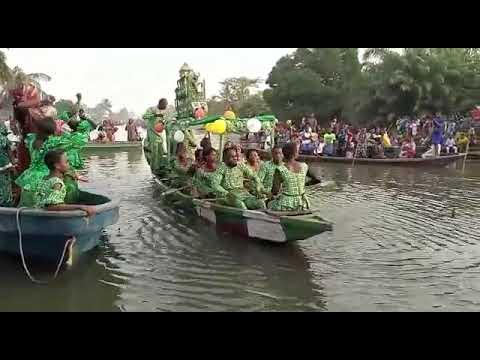
Boat Regatta (a spectacular display of maritime skill and community pride)
Ilaje Day
Twins Festival
Olokun / Malokun Festival (celebrating the sea goddess)
Other local masquerade and seasonal celebrations
These events reinforce communal bonds, historical memory, and the people’s deep spiritual connection to water.
Traditional Institutions
Ilaje traditional governance is structured around several autonomous kingdoms, each headed by a paramount ruler and supported by hierarchical chieftaincy systems:
Ugbo Kingdom — under His Royal Majesty, the Olugbo of Ugbo (currently Oba Frederick Obateru Akinruntan). Ode Ugbo serves as the ancestral capital. The kingdom comprises multiple quarters led by chiefs.
Mahin Kingdom — under the Amapetu of Mahin.
Aheri Kingdom — under the Maporure.
Etikan Kingdom — under the Onikan of Etikan.
Additional important stools include the Olu of Igbokoda, Alagho of Odonla, Olubo of Obenla, Odoka of Obe Ogbaro, and Odede of Igbo-Egunrin. These institutions regulate land, dispute resolution, cultural rites, and community development.
Traditional justice mechanisms, particularly the invocation of Ayelala, historically complemented formal systems by enforcing truth-telling and social accountability.
The kingdoms maintain strong cultural continuity while interacting with modern local government structures in Ilaje LGA.
Community Directory
Ilaje Local Government Area (headquarters: Igbokoda) encompasses over 400 towns, villages, and fishing camps. Major kingdoms and notable communities include:
Ugbo Kingdom: Ode Ugbo, Ugbonla, Aiyetoro, Awoye, Idiogba, Obe Nla, Odonla, Orioke, Zion communities, and numerous coastal camps.
Mahin Kingdom: Mahin, Igbokoda, Atijere, Mahintedo, Ipare, and inland settlements on more arable land.
Etikan and Aheri Kingdoms: Araromi Seaside (and Etikan variants), Zion Pepe, Agerige, and linear beach settlements.
Other significant places: Igbo-Egunrin, Obe Ogbaro, and various “Zion” settlements associated with independent church communities. The area is bordered by the Atlantic Ocean to the south, Ikale to the north, Ijebu to the west, and Itsekiri/Ijaw groups to the east.
Tourism Potentials
Ilaje possesses significant but largely underdeveloped tourism potential due to its unique coastal environment:
Extensive sandy beaches and scenic Atlantic coastline (including Araromi White Sand Beach).
Intricate networks of lagoons, creeks, and mangroves ideal for boat cruises, eco-tourism, bird-watching, and nature exploration.
Vibrant Boat Regattas and cultural festivals that can attract domestic and international visitors.
Historical and cultural sites such as the Ayelala shrine area, traditional palaces, and the unique history of Aiyetoro (once a prosperous theocratic community).
Opportunities for water sports, fishing tourism, and coastal hospitality development.
Proximity to the ongoing Lagos–Calabar Coastal Highway, which is expected to improve accessibility.
With proper investment in shoreline protection, infrastructure, hospitality facilities, and sustainable management, Ilaje could become a premier destination for cultural, eco-, and marine tourism in southwestern Nigeria.
Notable Sons & Daughters
Ilaje has produced distinguished personalities across traditional leadership, entertainment, business, and public life:
Oba Frederick Obateru Akinruntan — Olugbo of Ugbo Kingdom; prominent traditional ruler, oil entrepreneur (founder of Obat Oil), and one of Nigeria’s most influential monarchs.
Seyi Law (Seyi Lawal) — Popular Nigerian comedian, actor, and presenter, born in Ilaje.
Akpororo (Famous comedian and entertainer).
Small Doctor (Musician known for incorporating Ilaje cultural elements).
Dr. Kelly Akinjole
Other professionals, politicians, academics, and business leaders of Ilaje origin contribute significantly to Ondo State and national life, though many remain less publicly profiled outside traditional and entertainment circles.
Awards & Recognitions
The most widely documented recognition centers on traditional leadership and enterprise:
In 2014, Forbes ranked Oba Frederick Obateru Akinruntan as the second-richest king in Africa (estimated net worth of approximately $300 million at the time) and the richest in Nigeria, citing his success in the oil and real estate sectors. This elevated the visibility of Ugbo Kingdom and Ilaje traditional institutions on the continental stage.
Community-level achievements include the historical prosperity of Aiyetoro (once noted for high per-capita income and industrial self-sufficiency in the mid-20th century) and the ongoing contributions of Ilaje to Nigeria’s oil production and West African fisheries. Cultural preservation efforts and the resilience of traditional institutions continue to earn informal recognition within Yoruba and national discourse.
The Ilaje people embody a rich blend of ancient Yoruba heritage and adaptive coastal ingenuity. Their culture, institutions, and human capital offer strong foundations for cultural pride, sustainable tourism, and continued socioeconomic advancement. Greater documentation, investment in heritage infrastructure, and environmental protection will further amplify their story for future generations.